The Budget Analyst
Budget Like a Product. Think Like an Analyst.
Wednesday · August 26, 2026
Quick Hits
Houses, Inflation And One Chip Report
• Builders lose the summer. New home sales fell 10.5 percent in July to an annual rate of 607,000, about 6 percent below the same month last year.
• Inflation reading due. The core PCE index lands this morning, with forecasters expecting it to hold close to where it has been.
• Nvidia after the bell. The chipmaker reports tonight, and the question on every desk is whether the spending on artificial intelligence is producing revenue yet.
The Buyer’s Market Nobody Announced
Sales of newly built homes fell 10.5 percent in July to an annual rate of
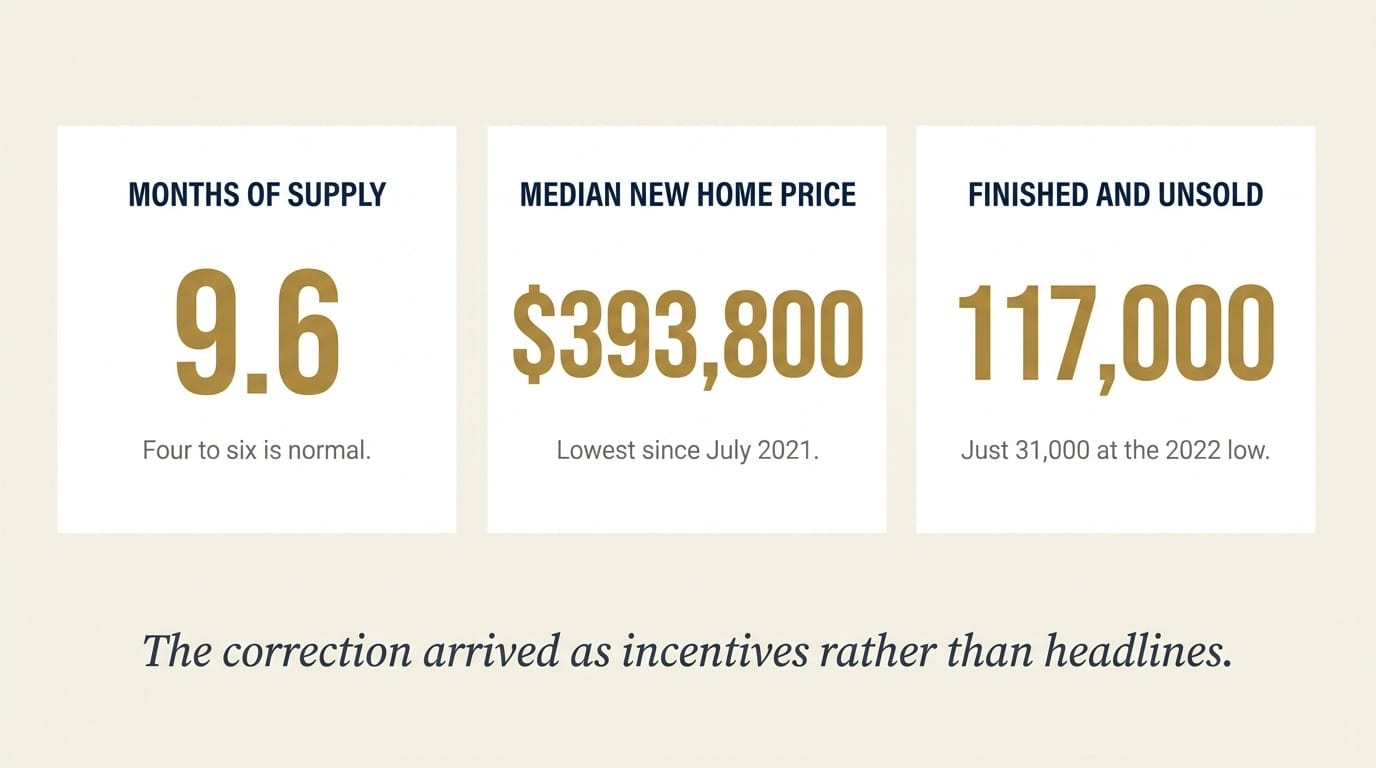
607,000, about 6 percent below the same month a year earlier. The median new home changed hands at $393,800, the lowest reading since July 2021. There are now 9.6 months of unsold supply on the market. Four to six is what a balanced market looks like. This one stopped being balanced a while ago.
Sponsored
A tiny government task force working out of a strip mall just finished a 20-year mission.
And with almost no media coverage, they confirmed one of the largest U.S. territorial expansions in modern history...
Thanks to sovereign U.S. law, this isn't just a national asset.
It's an American birthright.
But very few even know the opportunity exists.
If you want to see how you can get in line for your portion of this record-breaking windfall...
I've assembled everything you need to see inside a new, time-sensitive briefing:
Get all the details here - while the claim window remains open.
The Facts
Where The Adjustment Is Hiding
The inventory numbers carry the story better than the sales figure does. Builders were holding
488,000 new homes for sale at the end of July, and 117,000 of those were finished and standing empty. In February 2022 that finished-and-empty count was 31,000. Houses that had not been started yet reached an all-time high of 115,000, which is the industry saying it holds permits nobody is in a hurry to use.
Prices are responding, though not in the way a headline would suggest. The median
fell 2.3 percent from June and sits roughly 1 percent below last July. That understates what is happening, because the mix is shifting underneath it. Homes selling below $400,000 rose to 53 percent of the market from 50 percent a year ago, and the middle band between $400,000 and $1 million shrank from 46 percent to 42 percent.
The rest of the adjustment is arriving as money that never shows up in a price series. Rate buydowns, closing-cost credits, upgrade packages and outright price cuts are all doing work here. A buyer who negotiates a mortgage rate two points below the market for the first few years has received a large transfer of value, and the recorded sale price will show almost none of it.

• • •
What It Touches
Two Sides Of One Move
For a household in its fifties or sixties this market cuts in two directions at once. Anyone planning to sell a long-held home and move somewhere smaller is competing against builders who can discount in ways an individual seller cannot, and who have 117,000 finished houses they would like off the books before winter. That competition is concentrated in exactly the product a downsizer wants, which is the newer, smaller, single-level house.
The same conditions make the other side of that trade unusually good. A buyer in this market has leverage that did not exist three years ago, and the most valuable form it takes is the rate buydown rather than the discount. Cutting a mortgage rate by two points on a $400,000 loan saves far more over a decade than knocking $20,000 off the sticker, and builders would rather give the former because it protects the comparable sales in the neighborhood.
Sponsored
Most financial advisors love to tell you to diversify. They want you spread across 50 different stocks, hoping for the best.
According to Market Wizard Larry Benedict,
"Diversification is for dummies." When you're watching everything, you're watching nothing. Especially now, as President Trump triggers a historic regime change at the Federal Reserve.
Trillions of dollars are about to shift. And instead of scrambling to guess which sectors will win, Larry focuses on just
ONE specific ticker that sits directly at the heart of Fed policy.
This exact ticker previously helped his readers capture massive double and triple-digit gains during market shocks.
Today, he’s giving the name of this ticker away completely free. No guesswork. No complicated charts. Just one symbol you can trade right from your phone in under 60 seconds.
Go here to get the ticker symbol and see the full 2026 playbook.
Zoom Out
A Correction Without Forced Sellers
Housing corrections in this country rarely look like the one people remember. The 2008 version involved forced sellers, and forced sellers produce falling prices quickly. This one has almost none, because homeowners who refinanced at very low rates have no reason to move and builders have balance sheets strong enough to wait. What that produces is a slow correction that expresses itself through volume and incentives before it ever touches the price index.
That is why the supply figure matters more than the price figure right now. Months of supply measures how long it would take to clear the shelf at the current pace of sales, and at 9.6 it is telling you the shelf is not clearing. Builders will respond the way they always do, by slowing starts, which is what the record number of not-yet-started homes already shows. Fewer starts eventually tighten the market again, which is the mechanism that ends corrections like this one.
None of that arrives on a schedule. Mortgage rates track the long end of the Treasury curve rather than anything the Federal Reserve announces, and the long end has been under pressure all month. As long as it stays there, the incentive spending continues, the volume stays low and the price index drifts sideways while the real terms of trade move steadily toward whoever is buying. That is a correction, whatever the median print happens to say.
• • •
For Your Portfolio
I
f you are selling a home in the next year, price against the builder incentive in your area rather than against last year's comparable sales, because that incentive is your real competition. If you are buying, ask for the rate buydown before you ask for a lower price. And if you own a home you plan to keep, none of this touches you, which is worth remembering when the coverage gets loud.
The price held. Everything around it moved.
— Claire